Pay in installments of $5.29 with
 ,
,
 and
and

Shipping Estimate
USA
- USA
- CAN
- USA
- CAN
Ships within 48 hours · Estimated delivery Jun 29 - Jul 4
 Promo Codes Available:
For Your Every Summer RSVP, with Code: SUMMER15
Description
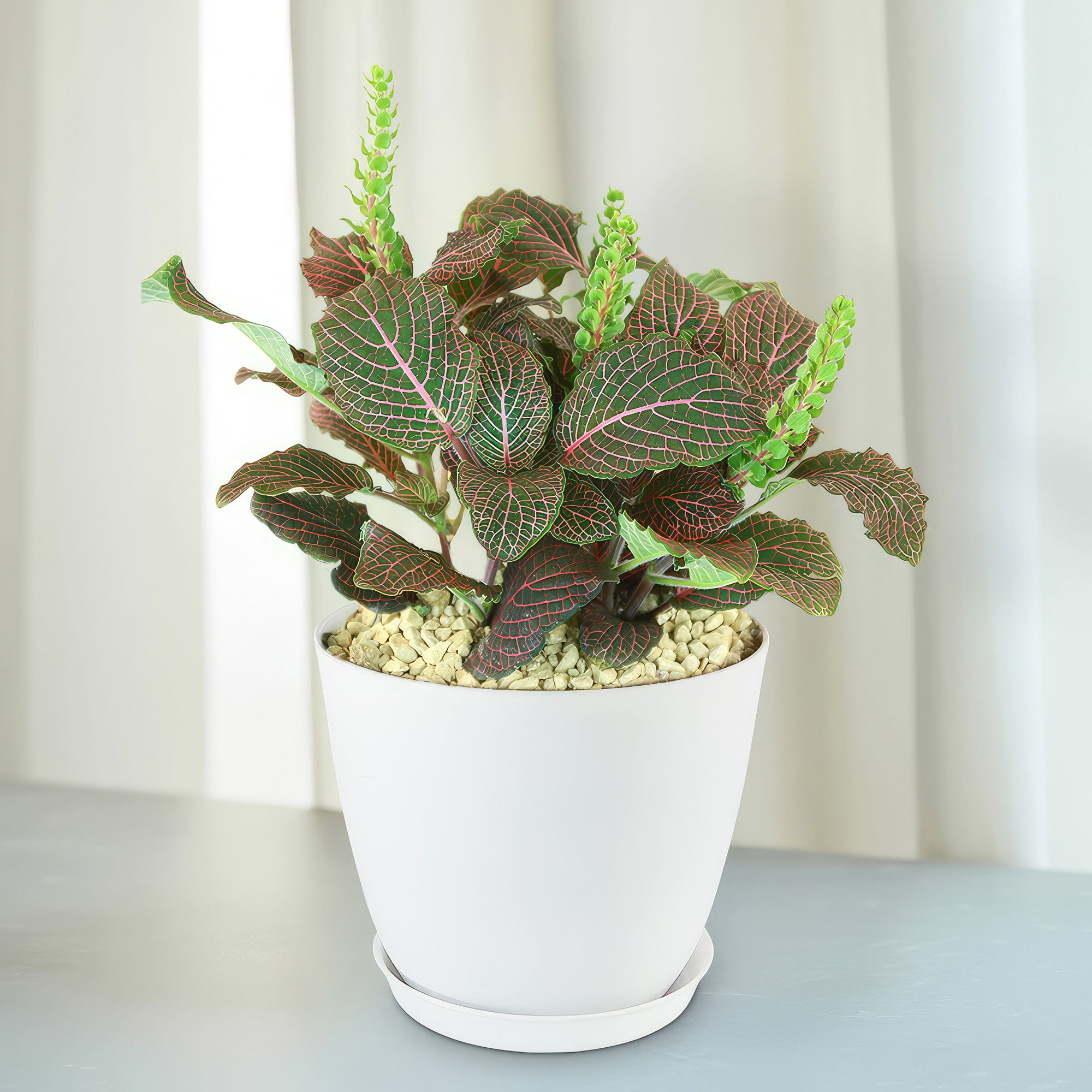
red green leaf house plants Red Nerve PlantKey Highlights Red Nerve Plant The Red Nerve Plant is known for its deep green leaves with bold red veins, creating a stunning contrast that adds color and texture to any indoor space. Fittonia Red Anne has a compact, trailing growth, making it ideal for hanging baskets, terrariums, or as ground cover in indoor plant arrangements. It thrives in low to medium indirect lighting, making it ideal for homes and offices. It also enjoys high humidity, making
Key Highlights – Red Nerve Plant
- The Red Nerve Plant is known for its deep green leaves with bold red veins, creating a stunning contrast that adds color and texture to any indoor space.
- Fittonia ‘Red Anne’ has a compact, trailing growth, making it ideal for hanging baskets, terrariums, or as ground cover in indoor plant arrangements.
- It thrives in low to medium indirect lighting, making it ideal for homes and offices.
- It also enjoys high humidity, making it a great choice for bathrooms or terrariums.
- According to the ASPCA, red Fittonia is non-toxic to cats and dogs, making it a safe option for pet owners.
The Red Nerve Plant, known as Fittonia albivenis 'Red Anne', is a striking variety of the classic Fittonia, known for its vibrant, red-veined foliage that creates a bold contrast against its deep green leaves.
This evergreen perennial is a popular choice for indoor plant because it works great in terrariums, hanging baskets, and indoor planters. Its spreading, trailing growth habit makes it an excellent ground cover in humid environments, while its compact size and low-maintenance nature make it ideal for tabletops and small spaces.
The Red Nerve Plant is native to the tropical rainforests of South America, particularly Peru and Colombia. In the wild, Fittonia grows as a creeping ground cover, spreading beneath taller plants and trees, benefiting from the dappled sunlight that filters through the canopy above.
The ‘Red’ variety is sometimes called the Red Fittonia, or Red Mosaic Plant because of its richly pigmented veins, which range from bright crimson to deep burgundy.
Fittonia albivenis 'Red' is an evergreen perennial with a trailing or spreading growth habit.
Its leaves are small, oval-shaped, and slightly textured, with a dark green base color and intense red veins that stand out vividly.
The plant has a moderate growth rate and remains relatively compact, making it an excellent choice for terrariums, dish gardens, and small indoor spaces.
The Fittonia also comes in a variety of colors such as white and pink nerve plant, opens in a new tab.
Like other Fittonia varieties, it prefers high humidity and does best when misted regularly or placed in a humid environment.
When grown indoors, this Fittonia red typically grows up to 6 inches tall and can spread up to 18 inches wide.
Its low-growing, creeping nature makes it ideal for filling in gaps in tropical arrangements or serving as a lush ground cover in humid greenhouse conditions. Regular pruning and pinching back the stems encourage fuller, bushier growth and prevent legginess.
The blooms of red Fittonia are small, inconspicuous, spike-like, and pale yellow to off-white in color. However, flowering is rare indoors, as the plant tends to focus its energy on its vibrant leaves. Many growers choose to remove the flowers to encourage continued leaf growth and maintain the plant’s aesthetic appeal.
When and How to Water Your Red Nerve Plant
One unique feature of Fittonia is its dramatic response to dehydration—if the soil dries out, its leaves will droop significantly but quickly recover once watered. This makes it an excellent indicator plant for moisture levels, helping you know exactly when it needs water.
Despite its delicate and lush appearance, the Red Nerve Plant is surprisingly drought-tolerant. This tropical plant prefers moist soil but can withstand short periods of dryness. However, allowing the soil to dry out completely for too long may cause wilting. It is crucial to find a balance by maintaining moderate moisture without overwatering, as excessive water can lead to root rot.
In the spring and summer, during its growing season, the Red Nerve Plant requires more frequent watering. Water the plant when the top inch of soil feels dry, usually about once or twice a week, depending on humidity levels. In higher humidity conditions, watering frequency may decrease. Always use room-temperature water and ensure proper drainage to avoid soggy roots.
In fall and winter, in its dormant season, your Nerve Plant requires less frequent watering. Reduce watering to about once every 10–14 days, ensuring the soil remains slightly moist but never completely dry. The plant’s growth slows during this time, meaning it requires less hydration. However, maintaining adequate humidity remains essential to prevent leaf curling and browning.
Light Requirements – Where to Place Your Red Fittonia
When growing indoors as a houseplant, place the Red Nerve Plant in bright, indirect light, such as near an east or north-facing window.
It thrives in filtered sunlight but is sensitive to direct sun exposure, which can scorch its delicate leaves.
Artificial grow lights can also be used to supplement light levels in low-light conditions.
When grown outdoors, it is best to place the Red Fittonia in a shaded or partially shaded location, where it receives around 2–4 hours of morning sunlight.
Avoid harsh afternoon sun, as it can damage the foliage.
If growing in a garden, plant it under larger foliage plants to provide natural shade.
Whether grown indoors or outdoors, the Plant benefits from stable light conditions. Avoid moving it frequently between bright and dim environments, as sudden changes in light can cause stress and leaf drop.
Optimal Soil & Fertilizer Needs
The Red Nerve Plant thrives in a well-draining, nutrient-rich soil mix. A combination of peat-based potting mix with perlite or sand ensures proper drainage and aeration. The ideal pH range is between 5.5 and 6.5, slightly acidic. Planet Desert has specialized potting soil, opens in a new tab that includes an organic substrate with mycorrhizae to help with the growth of a healthy root system to help your succulents thrive.
Fertilization is essential for vibrant foliage and steady growth. During the growing season, apply a balanced liquid NPK fertilizer once a year in the spring. Organic compost or worm castings can also provide additional nutrients. Over-fertilizing in winter can lead to salt buildup in the soil, which may cause leaf burns.
Hardiness Zones & More
When grown indoors as a houseplant, the Fittonia red prefers temperatures between 65°F and 80°F. It thrives in high humidity levels of 60% or more, making it ideal for terrariums or bathrooms. Avoid placing it near air vents or drafts, as sudden temperature fluctuations can cause stress.
For outdoor cultivation, the Red Nerve Plant is best suited for USDA Zones 10–11, where temperatures remain warm year-round.
It requires consistently humid conditions and partial to full shade to prevent leaf burning.
In colder climates, it must be brought indoors before temperatures drop below 55°F.
Wildlife – Red Nerve Plant Attracts the Following Friendly Pollinators
The Red Nerve Plant is known to attract beneficial pollinators like butterflies, hummingbirds, and small bees when grown outdoors. While its tiny blooms are not highly fragrant, they can still serve as a food source for these insects in certain conditions.
According to the ASPCA, the Red Nerve Plant is non-toxic to humans, cats, dogs, and birds. This makes it a safe choice for households with pets, as it does not pose a risk of poisoning if ingested.
How to Propagate Your Fittonia Red
The Red Nerve Plant is easily propagated through stem cuttings. Select a healthy stem with at least two leaf nodes, and trim it just below a node. Remove the lower leaves and place the cutting in water or moist soil. Rooting typically occurs within 2–4 weeks, after which the new plant can be transferred into its own pot. Keep the soil consistently moist and provide high humidity to encourage growth.
The Bottom Line
Overall, the red nerve plant is a stunning, low-maintenance evergreen perennial that brings a tropical touch to indoor spaces with its unique, red-veined foliage. Its adaptability to terrariums, hanging planters, and indoor gardens make it a favorite among plant enthusiasts, while its compact growth habit ensures it fits well in small spaces. With proper care—consistent humidity, indirect light, and regular misting—this pet-safe, easy-to-care-for houseplant will thrive, adding a burst of color to any collection. Whether paired with other Fittonia varieties or used as a standalone accent, the Red Nerve Plant is a true showstopper for plant lovers seeking bold, tropical beauty.
Shipping Notes
- Free Standard Shipping on $100+ Orders to the USA.
- Except Preorder products are shipped in 48 hours.
- Delivery to the USA:
- Standard Shipping : 3-10 business days
- If time is of the essence, please consider selecting expedited delivery for faster service.
Exchange/Return Notes
- We offer a 30-day return/exchange service after receiving.
- Final sale items are not eligible for returns or exchanges.
- To process your return/exchange, please contact us at [email protected]
- Please click here for more details>>> Return & Exchange Policy