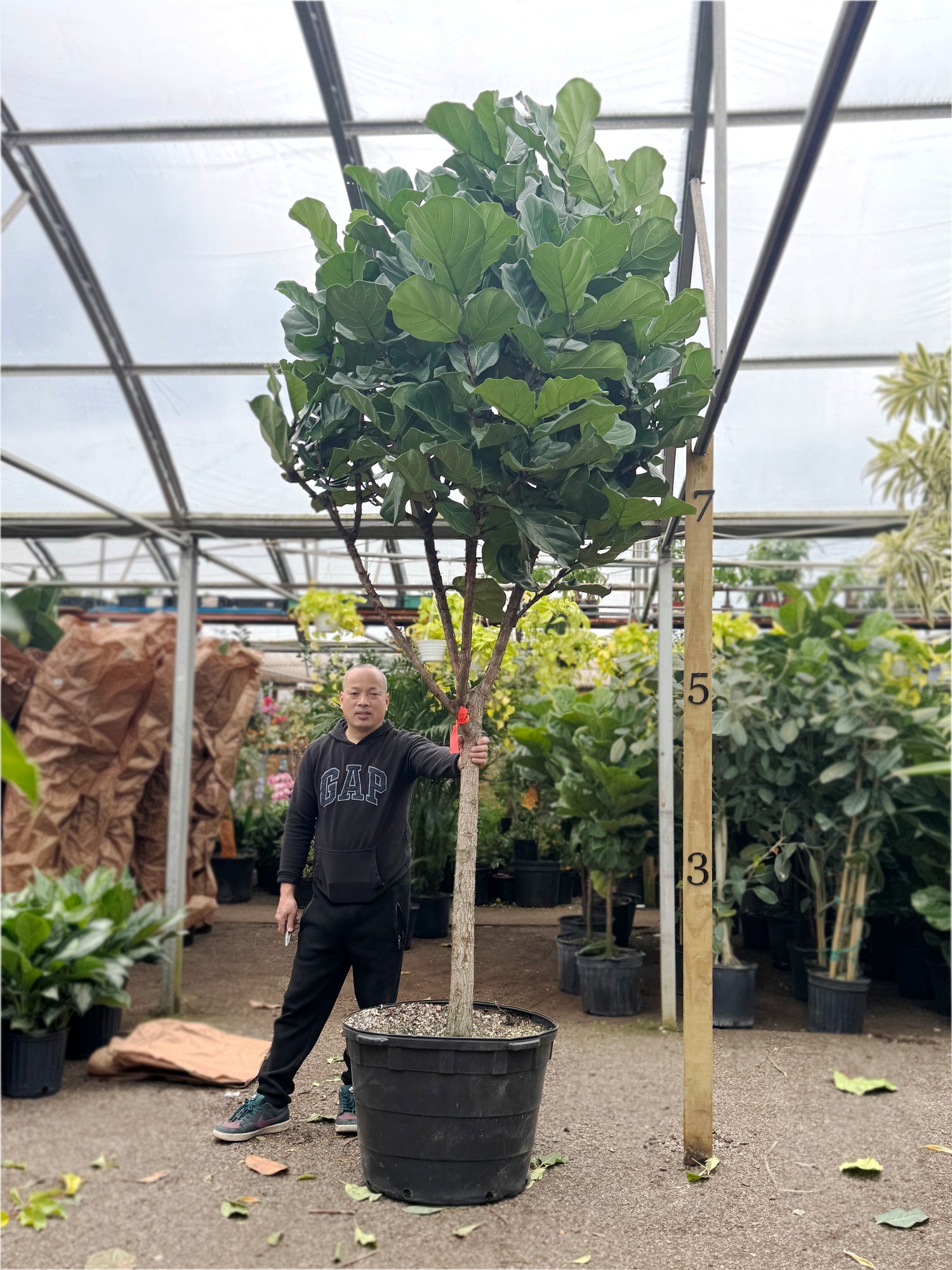
fiddle leaf fig ficus indoor plant Buy Giant Fiddle Leaf Fig Online | Rare Indoor Plant
SKU: 13448520162
fiddle leaf fig ficus indoor plant

fiddle leaf fig ficus indoor plant Buy Giant Fiddle Leaf Fig Online | Rare Indoor Plant

Sale price$23.33 Regular price$25.92
Save 10%

Pay in installments of $6.48 with ShopPay, AfterPay and Klarna

Shipping Estimate
USA
  • USA
  • CAN

Ships within 48 hours · Estimated delivery Jul 2 - Jul 7

Promo Codes Available:

For Your Every Summer RSVP, with Code: SUMMER15

Description

fiddle leaf fig ficus indoor plant Buy Giant Fiddle Leaf Fig Online | Rare Indoor PlantDescription The fiddle leaf fig brings natural elegance to your home. Its stunning violin shaped leaves transform any room into a sophisticated sanctuary. This West African beauty has won hearts worldwide with its dramatic presence and surprisingly forgiving nature. With those iconic leaves reaching up to 18 inches long, Ficus lyrata creates an instant focal point wherever you place her. Shes an absolute status symbol among modern decorators and plant

Description

The fiddle leaf fig brings natural elegance to your home. Its stunning violin-shaped leaves transform any room into a sophisticated sanctuary. This West African beauty has won hearts worldwide with its dramatic presence and surprisingly forgiving nature.

With those iconic leaves reaching up to 18 inches long, Ficus lyrata creates an instant focal point wherever you place her. She’s an absolute status symbol among modern decorators and plant-lovers. She's traded her wild rainforest home for designer living rooms, and we think she's made the right choice! 

This fiddle leaf fig tree grows steadily at 12-18 inches per year indoors, gracefully reaching 8-10 feet of living sculpture that brings warmth and character to your space. Which this plant is already over!

Care 

Do fiddle leaf figs need direct sunlight? 

Your fiddle leaf fig loves bright, indirect sunlight. She'll appreciate gentle morning sun if you gradually introduce it, but harsh afternoon rays can leave it looking stressed and unhappy. East-facing windows give brightness without overwhelming its delicate leaves.

Is the fiddle leaf fig high maintenance?

We like to think of the fiddle leaf fig as just having clear preferences (but truthfully she is high maintenance). She simply knows what makes it happy and isn't shy about showing you! Once you understand its rhythm, it’s quite the agreeable companion. 

It appreciates consistent care, stable placement (it's not fond of being moved around), and the right balance of water and humidity. Master these basics, and you'll have a stunning statement piece that rewards your attention with years of beautiful growth.

Is the fiddle leaf fig a good indoor plant?

The fiddle leaf fig makes an absolutely wonderful indoor plant for those who appreciate both beauty and purpose in their green companions. It's particularly special because it naturally purifies your air while creating that sophisticated, magazine-worthy look.

Its large, glossy leaves make any room feel more alive and welcoming. It's perfect for bright living rooms, spacious bedrooms, or that corner that's been waiting for something special to bring it to life.

Do fiddle leaf figs like being in a bathroom? 

Fiddle leaf figs love a bathroom with a window because it gives them that perfect combination of humidity and gentle light. The natural moisture from your showers reminds it of its tropical home. Just make sure there's good natural light.

Do fiddle leaf figs need sun or shade? 

Fiddle leaf figs thrive with bright light and gentle protection—bright, indirect sunlight is exactly what makes them happiest. Think filtered sunshine rather than deep shade or harsh direct rays. They need enough light to maintain those gorgeous, glossy leaves.

How do I know if my fiddle leaf fig is happy? 

A content fiddle leaf fig will show you its displeasure through its beautiful, upright posture and those glossy green leaves that seem to shine with health. You'll notice steady new growth and a general sense of vitality about it.

Do fiddle leaf figs need to be by a window? 

Your fiddle leaf fig definitely needs to be near a window that offers bright, indirect light for at least six hours each day to maintain healthy growth. Avoid placing it where cold drafts might reach it during winter—it demands consistency.

Windows facing east work beautifully, offering gentle morning light. South-facing windows can work too if you use sheer curtains to soften the intensity. 

Where should I put my fiddle leaf fig indoors? 

The best spots for your fiddle leaf fig plant are near an east-facing window, in a bright bathroom with natural light, or grouped with other humidity-loving plants to create a lovely little ecosystem. It's happiest at temperatures between 60-85°F (16-29°C).

Avoid high-traffic areas where it might get bumped or jostled, spots near heating vents or air conditioners, and any dark corners where it'll struggle.

How often should I water my fiddle leaf fig? 

Water your fiddle leaf fig when the top 2-3 inches of soil feel dry to the touch—typically once weekly during spring and summer, less frequently in winter. Base your plans on checking the soil rather than following a strict schedule. 

When you do water, give it a slow, thorough drink until water runs from the drainage holes. Consistency is what it appreciates most, helping prevent those dramatic responses it's known for.

Should I mist my fiddle leaf fig? 

Misting your fiddle leaf fig every few days helps create the humid environment it naturally craves, bringing a bit of that rainforest feeling to your home. Use filtered or distilled water to prevent spots on its beautiful leaves. 

You can also place it on a pebble tray filled with water or use a humidifier nearby—it'll appreciate any effort to increase the moisture around it.

Should I put coffee grounds in my fiddle leaf fig? 

Please skip the coffee grounds for your fiddle leaf fig—they can change the soil's pH and sometimes encourage mold growth, which won't make it happy. Instead, stick with a balanced liquid houseplant fertilizer every 1-2 months during spring and summer.

Are fiddle leaf figs sensitive to tap water? 

Fiddle leaf figs are sensitive to the chemicals commonly found in tap water, like chlorine and fluoride. Using filtered water, distilled water, or simply letting tap water sit overnight before using it can make a real difference.

What fertilizer should I use on my fiddle leaf fig? 

A balanced, liquid houseplant fertilizer works wonderfully for fiddle leaf fig fertilizer needs—dilute to half strength and apply every 1-2 months during the growing season. During fall and winter, let it rest without any feeding. It's quite sensitive to over-fertilizing.

Pet-friendly?

The fiddle leaf fig isn't safe for pets, as it can cause oral irritation, drooling, and digestive upset if your curious companions decide to sample its leaves. While it's not severely toxic, it's best to keep it out of reach of both cats and dogs who might be tempted to explore.

Are fiddle leaf figs poisonous to cats?

Fiddle leaf figs can cause oral irritation, excessive drooling, and stomach upset if cats chew on the leaves. The sap can also irritate skin, so it's definitely a "look but don't touch" plant for both you and your feline friends.

Are fiddle leaf figs toxic to dogs? 

Fig leaf trees can cause mouth irritation, drooling, and digestive issues if dogs nibble on the leaves, so consider keeping in a room where your dog doesn't usually spend time, or up high where those exploring noses can't reach.

Factoids

How fast do fiddle leaf figs grow? 

A giant fiddle leaf fig indoors can put on 12-18 inches per year when well cared for, gradually developing into tall living sculptures… or just skip a step and buy our fiddle leaf fig that’s 9-10 feet tall already. Growth depends on consistent light, proper watering, and seasonal changes.

Fiddle leaf figs are most active during spring and summer, taking a natural rest during the cooler months. 

Do fiddle leaf figs clean the air? 

Your fiddle leaf fig does double duty as both a beautiful statement piece and a natural air purifier. It removes common household toxins like formaldehyde, benzene, and trichloroethylene, while adding fresh oxygen wherever you decide to place it.

NASA's Clean Air Study recognized fig plants as effective air cleaners, so it's essentially a living air filter that happens to look absolutely stunning while doing her job.

Do fiddle leaf figs represent anything? 

Fiddle leaf figs symbolize prosperity, abundance, and good fortune. They're also obviously symbols of excellent taste in interior design circles! In feng shui traditions, large leafy plants like the fiddle leaf fig tree represent growth and abundance.

How did fiddle leaf figs get their name? 

Fiddle leaf figs earned their charming name because of their distinctive violin-shaped leaves. It got its botanical name Ficus lyrata because of the lyre, a stringed instrument similar to the fiddles that are played in folk music.

Buy a Fiddle Leaf Fig

This Giant Fiddle leaf fig is perfect for plant parents who appreciate both beauty and character. Give it what it needs, and it’ll reward your care with years of gorgeous growth and undeniable style. You can even choose one of the Full or Huge sizes on a call with our experts. 

Our fiddle leaf fig trees make stunning statement pieces that start conversations and pull in admiring glances with their graceful presence and air-purifying benefits.

Shipping Notes
  • Free Standard Shipping on $100+ Orders to the USA.
  • Except Preorder products are shipped in 48 hours.
  • Delivery to the USA:
  1. Standard Shipping : 3-10 business days
  • If time is of the essence, please consider selecting expedited delivery for faster service.
Exchange/Return Notes
  • We offer a 30-day return/exchange service after receiving.
  • Final sale items are not eligible for returns or exchanges.
  • To process your return/exchange, please contact us at [email protected]
  • Please click here for more details>>> Return & Exchange Policy
SKU: 13448520162

Discover Niche Categories That Outsell fiddle leaf fig ficus indoor plant

Top-Converting Item to Boost Your Average Order

4.7 ★★★★★
Based on 958 reviews
Sort
Highest Rating
Newest First
Oldest First
Product Reviews
D
Verified Purchase
David Escobar
Grantham, US
★★★★★ 5
Good starting point. But can't find the code.
Format: Kindle
Reading chapter 3. It was so far so good, but can't find the code in the repo. "All the related code can be found in the repository under project/hooks-notification." And in the repo I see no project folder. Please help!
WAS THIS REVIEW HELPFUL?YesReportShare
Reviewed in the United States on April 3, 2026
W
Verified Purchase
WU.
Draper, US
★★★★★ 4
Good overview of the leading Agentic Framework. Will become outdated quickly.
Format: Paperback
3.5 Stars rounded up. Not a bad place to start if you need to get up to speed fast with Claude Code, understand its vast feature set, how it works under the hood, best practices, and the various agent primitives and how to get the most out of them. Agentic frameworks (Claude Code in particular) are quickly becoming table stakes for anyone working in tech, so it's best to start now. I appreciated the author's ability to flesh out areas where Anthropic's documentation is lacking in depth and nuance, and for some not already working with Claude in their own repos, the fact that he provides "toy" repos where one can experiment with the tools without fear of consequence. Where the book falls short is that most of the stuff in here is already covered pretty well already in Anthropic's docs, or even better so in their free "Skilljar" courses. What's more, some areas are given a bit of a shallow treatment, while others are a bit better done. So it's a bit inconsistent in that sense. Also, I can see how this book will quickly lose its currency in a few months at the pace things are going. Ultimately, for me, the price of this book was a bit rich for my liking given the criticisms above. Still, I feel like I got valuable info that rounded up what I already knew from working with this agentic framework. Recommended.
WAS THIS REVIEW HELPFUL?YesReportShare
Reviewed in the United States on May 28, 2026
B
Brahmananda Reddy
Boise, US
★★★★★ 5
Practical AI Engineering Beyond Prompts — One of the Better Books on Agentic Coding
Format: Paperback
This book is not another “AI coding hype” book. A lot of books talk about agents at a very high level. This one actually explains how things work when you try to use them inside real development workflows. That was the biggest difference for me. What I liked most was the focus on context engineering, memory, MCP, hooks, subagents, and workflow orchestration instead of just “prompt better.” The author spends time explaining why long-running agent systems fail, how context grows over time, and why most AI coding setups become messy without structure. The examples also feel practical — The HookHub project, Next.js setup, GitHub workflows, Claude memory files, and MCP integrations make it easier to connect theory with actual implementation. From my retail domain experience perspective, I could immediately connect this to forecasting and pricing workflows. For example: * agents helping analysts generate specs before model development * automated code review for promo forecasting pipelines * isolated subagents for pricing, promotions, assortment * persistent memory for business rules across teams * MCP integrations to pull context from internal systems safely The section around context isolation and subagents especially stood out because that is very similar to how enterprise forecasting teams already operate in reality. Different teams own different decision spaces. One thing I appreciated: the author does not oversell AI. There is a strong focus on constraints, context pollution, hallucinations, performance degradation, and workflow reliability. That makes the book feel grounded instead of marketing-heavy. This is not for complete beginners though. If someone has never worked with Git, APIs, coding agents, or LLM workflows, parts of the book may feel overwhelming early on. The author clearly says this is not beginner-level content. Overall, probably one of the more practical books I have read recently on agentic coding systems. Good for: * software engineers * AI engineers * enterprise architecture teams * technical product teams * analytics leaders trying to operationalize AI development workflows Especially useful if your organization is trying to move from “AI demos” into actual production workflows.
WAS THIS REVIEW HELPFUL?YesReportShare
Reviewed in the United States on May 20, 2026
U
UA
Phoenix, US
★★★★★ 5
A Good Reality Check on How AI Agents Actually Work in Enterprise Systems
Format: Paperback
Most AI books stop at prompts. This one goes deeper into how agent systems actually behave once you try to use them inside large workflows with memory, tools, permissions, automation, and multiple agents working together. That part felt very relevant for healthcare and enterprise environments. The book does a good job explaining why context engineering matters and how poor context handling creates hallucinations, inconsistent outputs, and degraded performance over time. Honestly, that is one of the biggest problems organizations underestimate right now. In healthcare workflows, context matters a lot: * prior interactions * business rules * auditability * escalation logic * safety constraints * tool permissions * workflow boundaries The sections on persistent memory, scoped context, subagents, and structured workflows connected strongly to that reality. I work in enterprise analytics, and while reading this book I kept thinking about use cases like: * pharmacy workflow automation * prior authorization support systems * coding assistants for healthcare engineering teams * AI copilots for operational analytics * agent-based escalation systems * claims and workflow orchestration The MCP chapters were also useful because they explain integration challenges clearly instead of treating tooling as magic. What made this book stand out for me was the balance between implementation and architecture. The author explains: * why long contexts fail * how context poisoning happens * why isolation matters * when parallel agents help * when they actually create more complexity That level of honesty is missing in many AI books right now. Another thing: the examples are not overly academic — The Next.js project setup, GitHub automation, Claude desktop workflows, memory systems, hooks, and subagents make the learning process feel practical and hands-on. One limitation: this book assumes technical background. Someone completely new to coding agents, LLMs, Git, or development workflows may struggle in the first few chapters. But for engineers, AI teams, enterprise architects, and technical leaders trying to understand where agentic coding is actually going, this book is worth reading. Especially for organizations trying to operationalize AI safely instead of just experimenting with chatbots.
WAS THIS REVIEW HELPFUL?YesReportShare
Reviewed in the United States on May 20, 2026
C
Christopher West
Pawtucket, US
★★★★★ 5
Great book! Practical and for developers that already use AI!
Format: Paperback
I purchased "Agentic Coding" by Claude Code due to my desire for an alternative to generic "Prompt Template" type resources related to AI-based development. This book accomplishes just that. As opposed to merely viewing Claude Code as a "magic box", the author has explained how to utilize it in conjunction with other actual development processes. The authors' emphasis on "context engineering" (i.e., structuring data/information; managing knowledge in a project; guiding an AI agent to produce consistent results vs. producing random/unknown results) represents the strongest component of the book. It should be noted that the book appears to be intended primarily for experienced developers with prior experience in software development and/or familiarity with AI-based development tools. Should you be familiar with Git, the command-line interface, and/or modern development processes, you may find this resource very helpful. Conversely, I did appreciate the fact that there were no novice-oriented descriptions provided throughout the book. The aspect of the book that I found most valuable, however, is the extremely pragmatic nature of the material contained within. The examples illustrated through developing/maintaining CLAUDE.md files; utilizing Claude Code in combination with GitHub Workflows; employing MCP Servers; and creating multi-agent or sub-agent workflows all seemed to reflect a clear focus on "real world usage" rather than theoretical constructs. In addition, each chapter builds upon previous chapters in such a manner as to provide a logical progression through which the reader can easily understand and ultimately implement the concepts learned. I also appreciated that the author included guidance on responsible utilization of the tool(s), as well as maintaining control over what changes are made by the agent. While numerous books regarding AI focus solely on what AI tools can accomplish, this book addresses both how to utilize these tools effectively in a real codebase, as well as responsibility and safety considerations. In summary, this is not a book for individuals completely inexperienced in either programming or generative AI. However, if you are currently experimenting with tools such as Claude, Cursor, GitHub Actions, or MCP, this is likely one of the more useful and practical books available on the subject. Recommended for software engineers seeking to transition from simply "prompting an AI" into establishing a repeatable/professional workflow process surrounding agentic coding.
WAS THIS REVIEW HELPFUL?YesReportShare
Reviewed in the United States on April 11, 2026

recommand products