Pay in installments of $6.05 with
 ,
,
 and
and

Shipping Estimate
USA
- USA
- CAN
- USA
- CAN
Ships within 48 hours · Estimated delivery Jul 2 - Jul 7
 Promo Codes Available:
For Your Every Summer RSVP, with Code: SUMMER15
Description
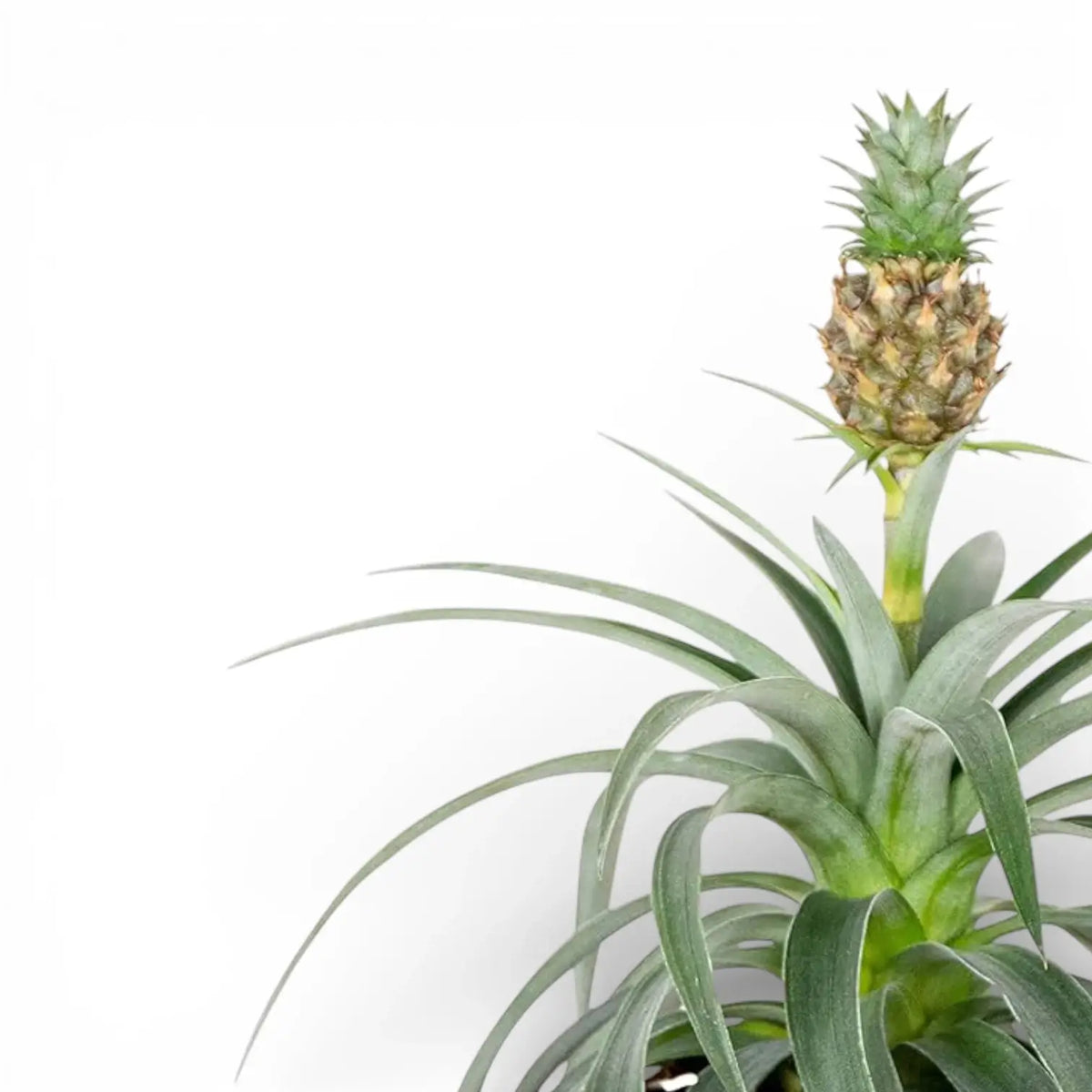
ananas pineapple plant Ananas comosus 'Corona' PineappleAnanas comosus 'Corona' A small ornamental pineapple rises from the centre of Ananas comosus 'Corona', surrounded by a dense rosette of stiff, sword shaped green leaves with spiny edges. It stays small compared with pineapple plants grown for fruit and is kept indoors for its small ornamental fruit. One rosette produces the central fruit. After the fruiting stage, that rosette gradually declines, while new growth continues through basal offsets. These
Ananas comosus 'Corona'
A small ornamental pineapple rises from the centre of Ananas comosus 'Corona', surrounded by a dense rosette of stiff, sword-shaped green leaves with spiny edges. It stays small compared with pineapple plants grown for fruit and is kept indoors for its small ornamental fruit.
One rosette produces the central fruit. After the fruiting stage, that rosette gradually declines, while new growth continues through basal offsets. These offsets can be grown on as the next plant.
Fruiting rosette
- Habit: Terrestrial bromeliad with an upright rosette.
- Size: Small ornamental pineapple grown as an indoor plant.
- Leaves: Stiff, sword-shaped green leaves with spiny edges.
- Fruit: Ornamental pineapple held on a central stalk.
- Lifecycle: The original rosette declines after fruiting; offsets continue the plant.
- Roots: Soil roots require both moisture and good drainage.
Origin and growth cycle
Pineapple is native from Costa Rica into tropical South America and grows in seasonally dry tropical environments. It grows as a soil-rooting bromeliad, so the roots need a mix that holds some moisture but drains freely.
Care
- Very bright light, including some gentle direct sun, helps keep the rosette firm.
- Acclimate gradually before giving stronger light.
- Water the substrate when the top few centimetres are dry, then let excess water drain away.
- Keep the crown drier in cooler conditions.
- Use a light, gritty, well-draining mix.
- Keep it warm, ideally above 18 °C, especially while it is actively growing.
- Keep the plant away from cold draughts and cold, wet roots.
- After fruiting, allow basal offsets to develop and grow them on as the next plant.
- Use a diluted fertiliser while the plant is actively growing.
Common issues
- Soft base: Check for cold, wet substrate, poor drainage or early rot.
- Brown leaf tips: Check for irregular watering, salt build-up or very dry roots.
- Pale, stretched leaves: Move the plant gradually into brighter light.
- Crown rot: Water sitting in the centre during cool conditions can damage the plant.
- Old rosette decline: Normal after fruiting when offsets are forming.
- Pests: Check for mealybugs, scale or spider mites around leaf bases and the fruit stalk.
Handling and safety
Ananas comosus 'Corona' has sharp, spiny leaf margins. Handle carefully and keep it away from pets and small children. The fruit is ornamental and should stay on the plant.
Name meaning
Ananas comosus belongs to the Bromeliaceae family. The genus name Ananas comes from an Indigenous South American word for pineapple. The epithet comosus means “tufted”, referring to the leafy crown above the fruit.
Shipping Notes
- Free Standard Shipping on $100+ Orders to the USA.
- Except Preorder products are shipped in 48 hours.
- Delivery to the USA:
- Standard Shipping : 3-10 business days
- If time is of the essence, please consider selecting expedited delivery for faster service.
Exchange/Return Notes
- We offer a 30-day return/exchange service after receiving.
- Final sale items are not eligible for returns or exchanges.
- To process your return/exchange, please contact us at [email protected]
- Please click here for more details>>> Return & Exchange Policy